Why This Region?
Phaktanglung is one of the hardest places in Nepal for children to get a reliable education. Villages are scattered across steep valleys, schools sit hours apart and floods, landslides and heavy weather routinely cut off entire communities. In a landscape like this, learning is never guaranteed — especially for younger children walking long distances to class.
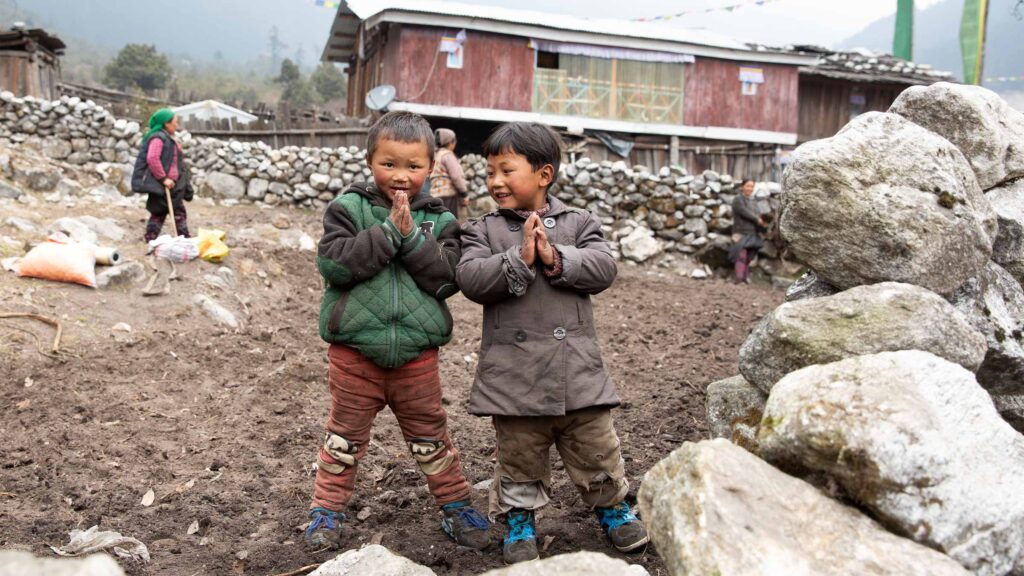
The Phaktanglung Region is one of the hardest parts of Nepal to reach.
What We’ve learned
HDFA has worked in Eastern Nepal for more than a decade.
• In Ghunsa, the community transformed a cold, single classroom into a thriving local school and strengthened their clinic, governance and livelihoods — eventually taking full responsibility for the school, hostel and health post.
• In Hellok, improvements in teaching, school facilities, farming and basic health support have shown how a whole village can lift together when families have the conditions they need to keep children learning.
Eastern Nepal Rising builds directly on these successes — but looks at the entire municipality.
The Project
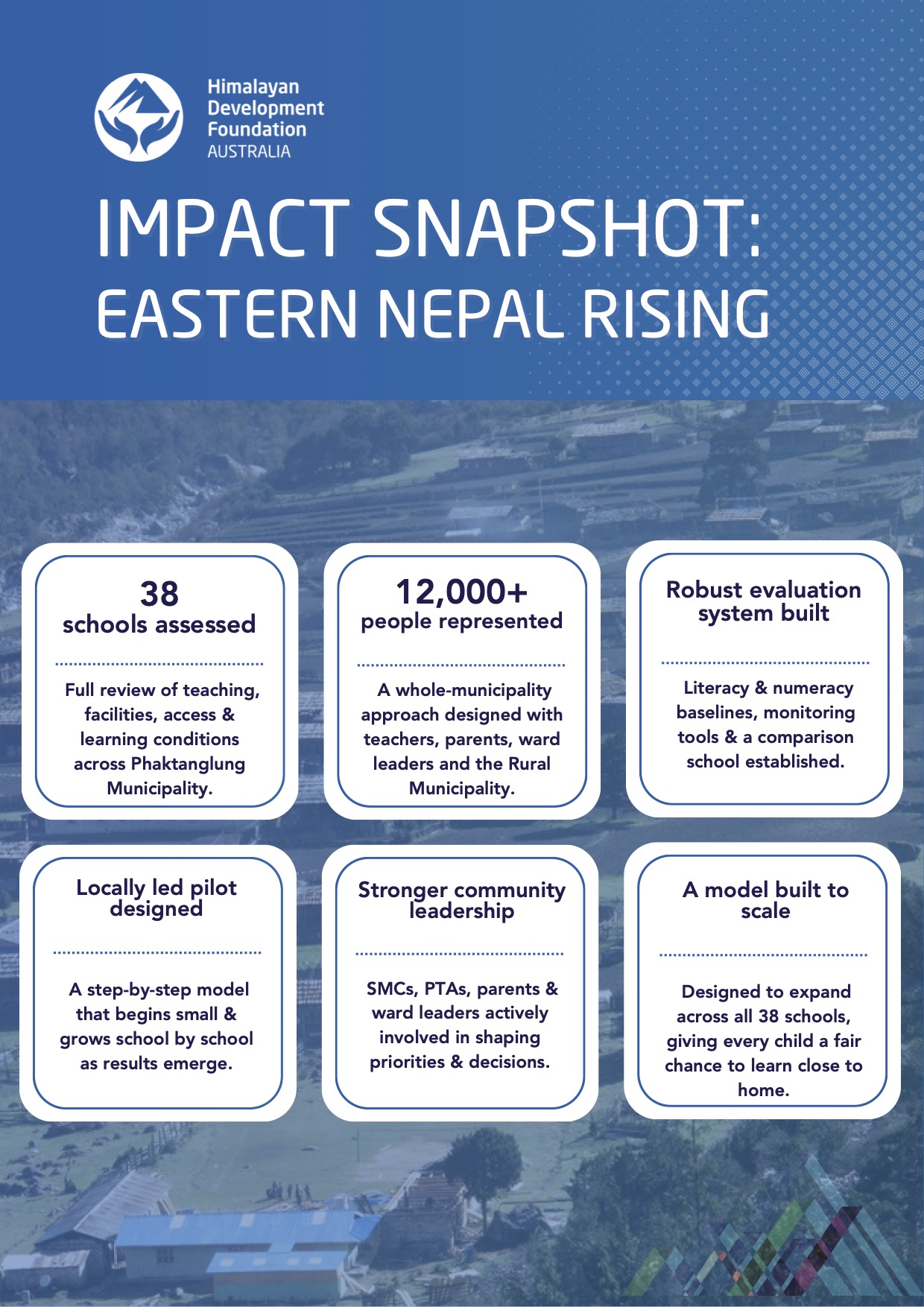
Eastern Nepal Rising is HDFA’s most ambitious project yet — a locally led, cradle-to-career plan to strengthen teaching, support families and improve opportunities across the 38 mountain schools of Phaktanglung.
It begins with a focused pilot: a small number of schools chosen by the community to test what works first. The pilot strengthens teaching, upgrades basic facilities, supports parents and school committees, and links learning to real farming and employment pathways.
As results grow and local leadership builds, the model will expand — school by school, ward by ward — until it reaches all 38 schools across the municipality. Designed in close collaboration with parents, teachers, ward leaders and the Rural Municipality, this is a step-by-step plan built to scale naturally as the community leads the way.
Local Leadership At Every Level
Parents, School Management Committees, teachers and ward leaders helped identify the priorities. The Rural Municipality, from ward chairs to the Mayor’s office, is directly involved in planning and decision-making.
This project is led by the people who live here — HDFA is the support crew.
Our Partners
• PHASE Nepal – remote-community specialists strengthening health, hygiene, family wellbeing and school engagement
• Kanchenjunga Buddhist Social Service (KBSS) – long-standing local leaders with deep relationships in the region
• Almost Heaven Farms (AHF) – agroecology experts providing orchard training, soil health and pathways into the Agroecology Institute
• Phaktanglung Rural Municipality – co-funding, co-leading and coordinating with schools across all wards
Foundations in place
• First full review of all 38 schools completed
• Community priorities mapped with teachers, parents, SMCs and ward leaders
• Pilot design completed with HDFA, PHASE Nepal, KBSS, AHF and the Municipality
• Literacy and numeracy baseline framework established
• Comparison school identified
• Practical support package prepared for pilot schools
• Livelihood pathways aligned with AHF’s orchard and soil programs
• Municipal commitment secured for shared leadership and resourcing
• Children attending school more consistently despite monsoon disruption
• Teachers confident, supported and better equipped
• Safer, better-resourced classrooms
• Families with more stable food and income
• Young people accessing skills and pathways linked to local work
• A clear, locally led model that can scale across all 38 schools
• A generation of children able to learn, grow and imagine their future close to home
Impact Goals
• 38 schools engaged
• 1 pilot ready to launch
• 100+ teachers, SMCs and parents involved in planning
• 100+ farmers engaged in orchard/soil training
• 2,000 fruit and nut trees distributed across the region
• 1 local biofertiliser factory supporting soil health
• 1 municipality-wide literacy and numeracy baseline
• 1 world-leading model designed to grow valley by valley, ward by ward