Hellok Project

From the edge of the Kanchenjunga trail, Hellok is building better classrooms, stronger farms and new opportunities for its young people.

IMPACT SNAPSHOT

Hellok sits off the main trail toward Kanchenjunga Base Camp — a cluster of mountain villages with strong community ties, emerging young leaders and a landscape that demands practical solutions. For years, the area received little outside support, leaving families with limited work options, basic school facilities and a health service stretched by distance and terrain.

HDFA’s work with Hellok is built on partnerships with local leaders, the Rural Municipality and Almost Heaven Farms. Together, we focus on improving daily life in simple, effective ways: stronger teaching in the classroom, better hygiene and water systems, a more reliable supply of medicines and equipment, and new skills that help farmers grow and earn more from their land.
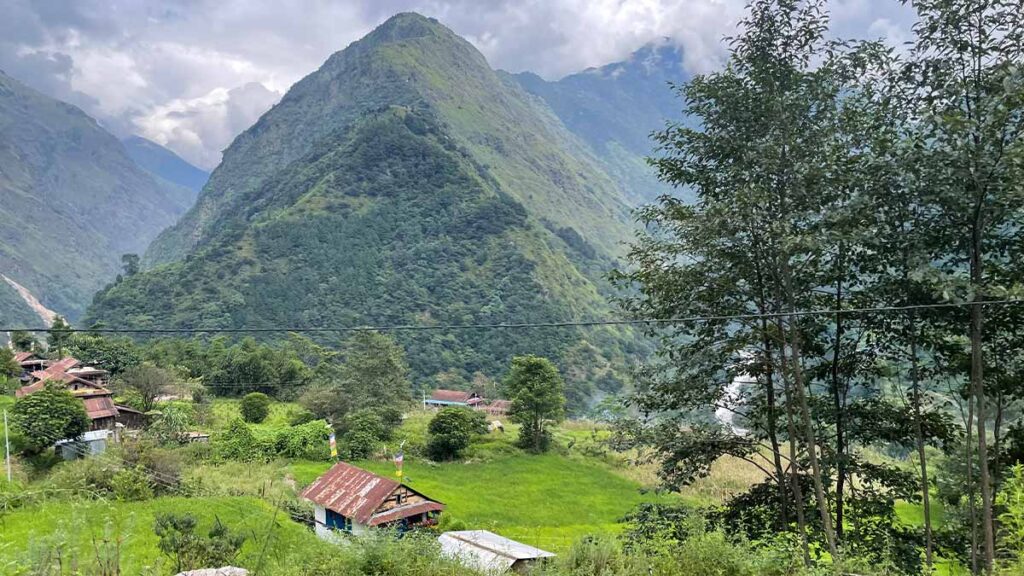
The Hellok village sits in the foothills of Kanchenjunga Region

Location of Hellok, Nepal

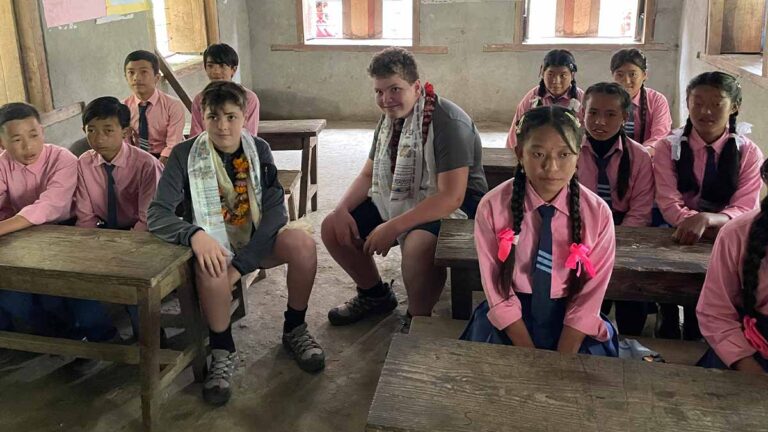
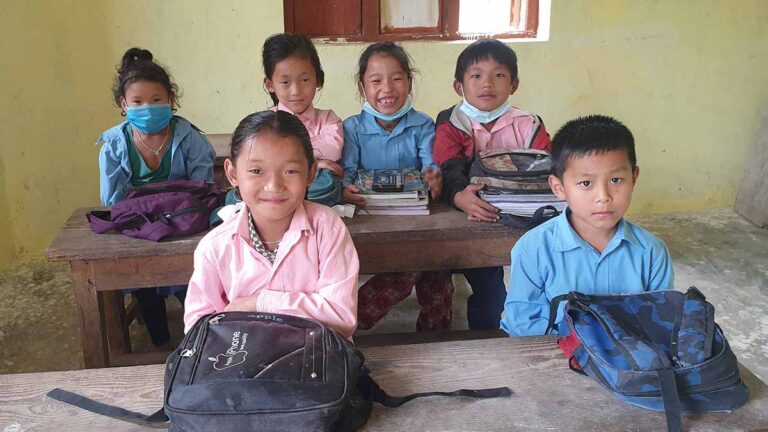
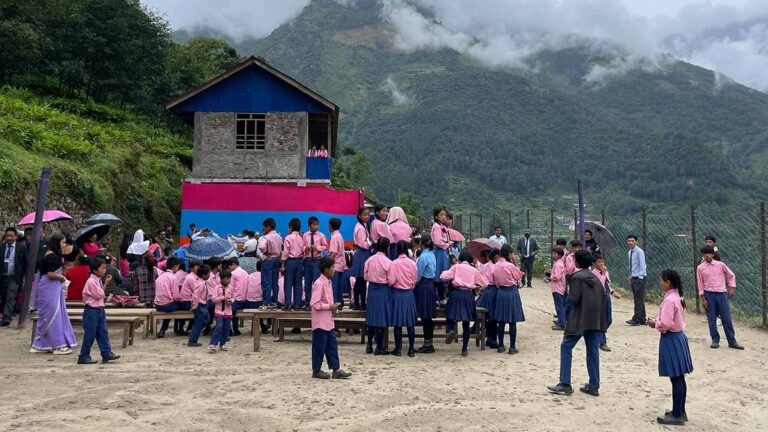
At the school, English teachers, coaching classes and improved facilities are helping students stay engaged and progress with confidence. Clean water, safer toilets and a fenced school compound have made the environment more stable and supportive for learning. In the health unit, updated supplies, staff training and community health sessions are strengthening basic care across the surrounding villages.

A major focus in Hellok is building long-term food and income security. With training in orchard management, composting and soil health — along with the establishment of a locally run biofertiliser factory — farmers are adopting new methods that improve yields and support more sustainable livelihoods. Women have begun launching small enterprises with shared backing from the community, the Municipality and HDFA.

Hellok remains remote and shaped by the challenges of mountain life, but the foundations are shifting. Better teaching, stronger farming systems and active local leadership are opening up more stable opportunities for families — and giving children more reason to stay in school and look ahead.
What Impact Looks Like

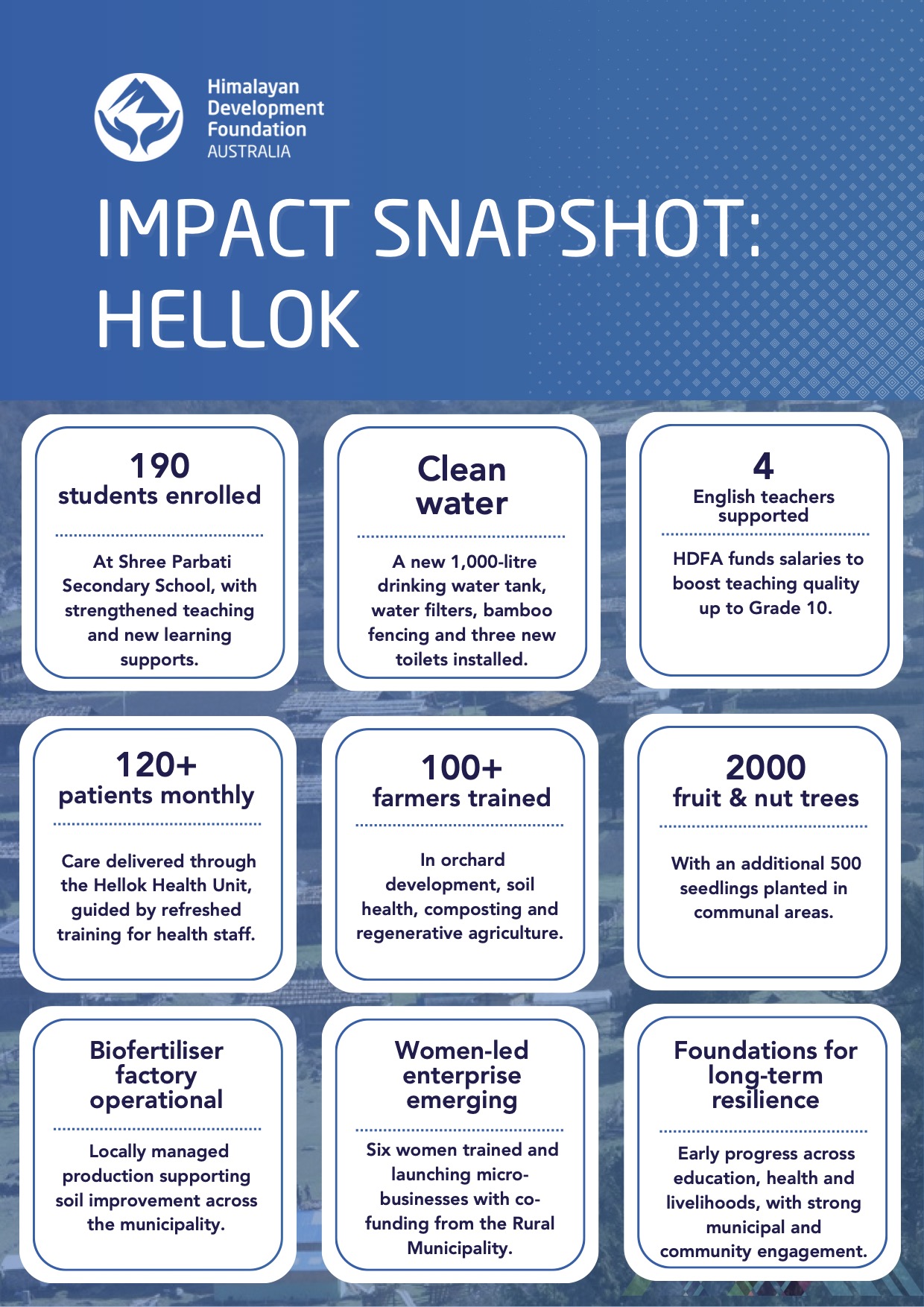
  • School enrolment steady at around 190–195 students.
  • New desks and classroom furniture constructed.
  • School compound fenced to improve safety and boundary control.
  • Three new toilets built.
  • Drinking water system upgraded with a 1,000-litre drum and water filters.
  • HDFA supported salaries for four English teachers.
  • Mid-day meals and healthy snacks provided up to Grade 10.
  • Coaching classes introduced to support student learning.
  • A targeted SEE improvement plan prepared.
  • Teacher training and School Management Committee training planned and underway.
  • Local government being lobbied to add more classrooms.
  • Hellok Health Unit serving approximately 120 patients per month.
  • Medicines and equipment supplied, including items not provided by government.
  • Positive feedback from community and staff regarding service improvements.
  • Challenges identified early: small building footprint, limited sunlight and seasonal isolation (landslides/floods).
  • Staff completed refresher training in NCDs, psychosocial counselling, child protection and midwifery.
  • Health awareness activities delivered though mothers’ groups and Female Community Health Volunteers.
    Formal budget request submitted to expand the health facility.
  • Biofertiliser factory fully operational with a trained local manager.
  • Organic fertiliser production and initial sales underway.
  • More than 100 farmers trained in orchard management, composting and organic practices.
  • 2,000 fruit and nut plants distributed across the municipality.
  • 500 additional seedlings planted on community land and near schools.
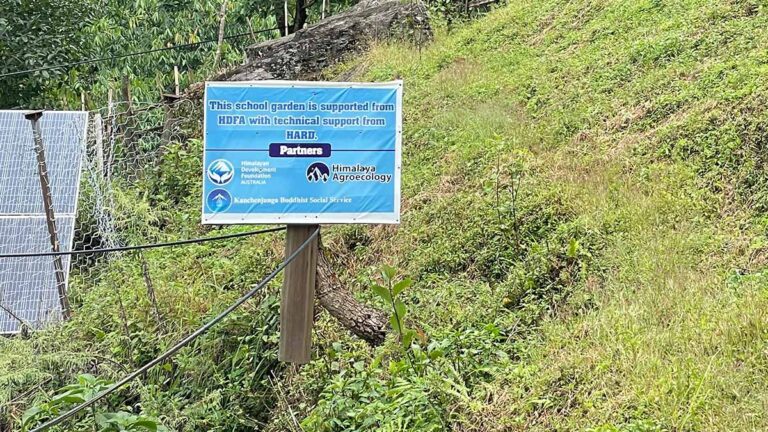
  • A fruit garden established at the school.
  • Six women completed micro-enterprise training and started small businesses with municipal co-funding.
  • Lower-interest community loans facilitated.
  • Plans in place for a seedling nursery at the Agricultural Research Center
  • Strong coordination between KBSS, the Rural Municipality, AHF and community groups.
  • Improved farming practices building more stable household incomes.
  • Active local government engagement, including funding and staff support.
  • Steady improvements in school facilities, farming systems and health care contributing to longer-term community resilience.