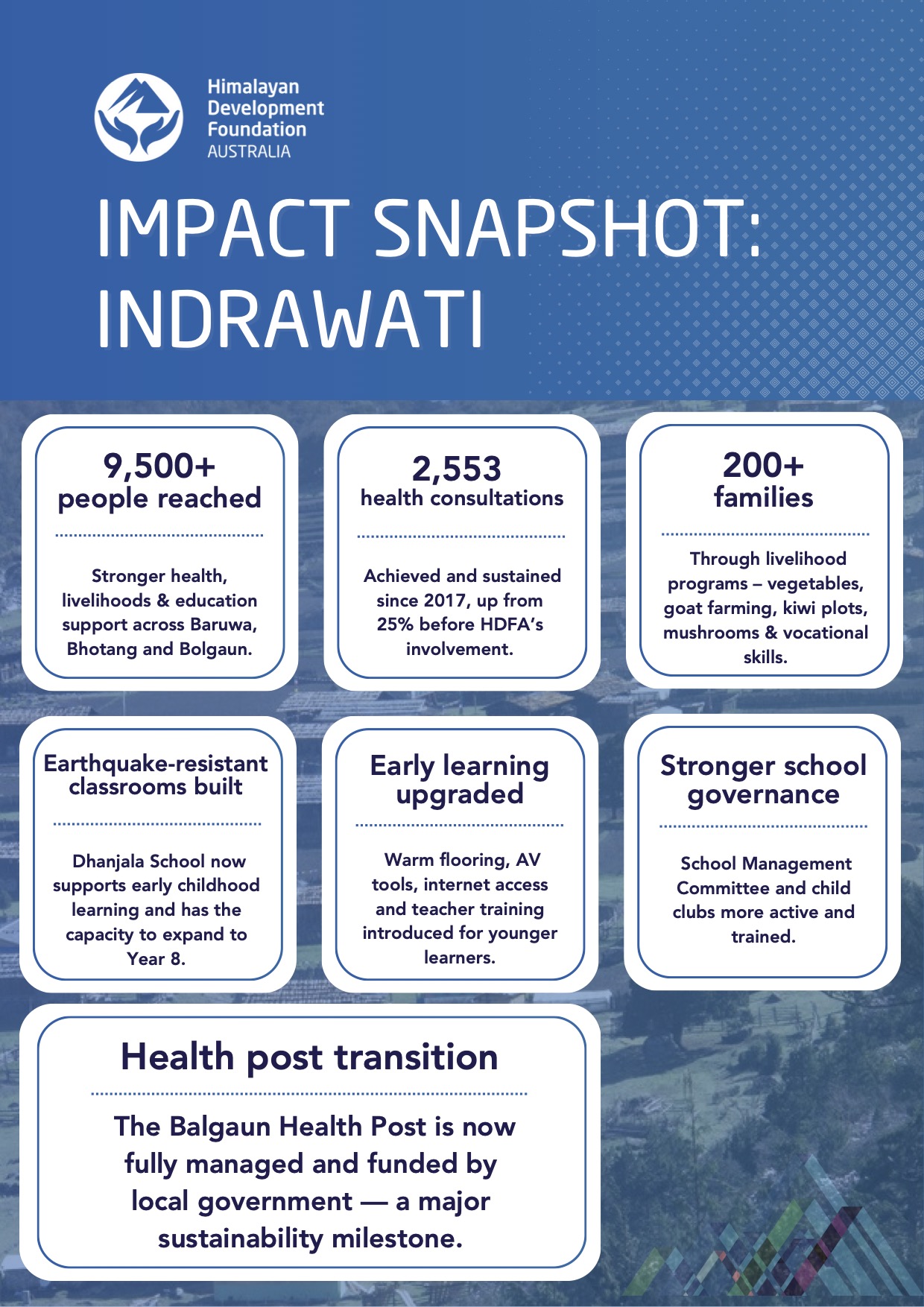
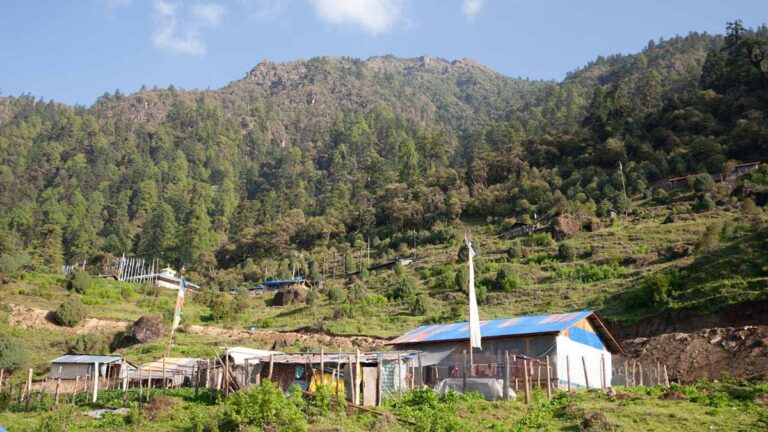
Indrawati is a remote region in Sindhupalchok District, one of the areas most severely damaged in the 2015 earthquakes.
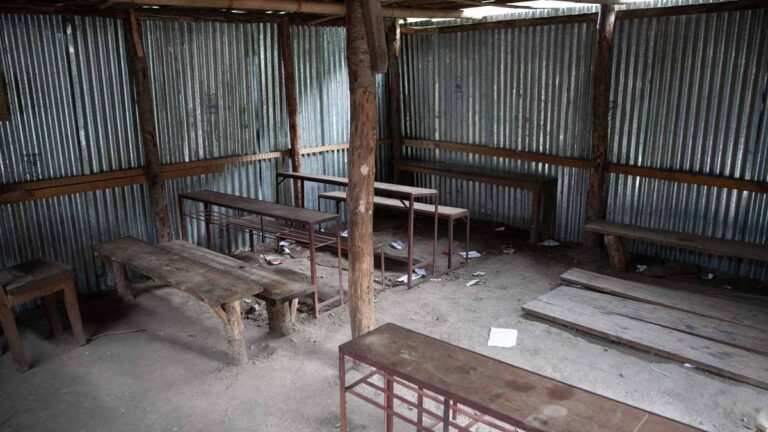
When HDFA began working here in 2016, schools were under-resourced, the health system was fragile, and families lacked the income stability needed to keep their children in school. Poverty and displacement had also made the region a known hotspot for child trafficking and unsafe labour migration, with girls and young people particularly at risk when families were forced to leave in search of work.
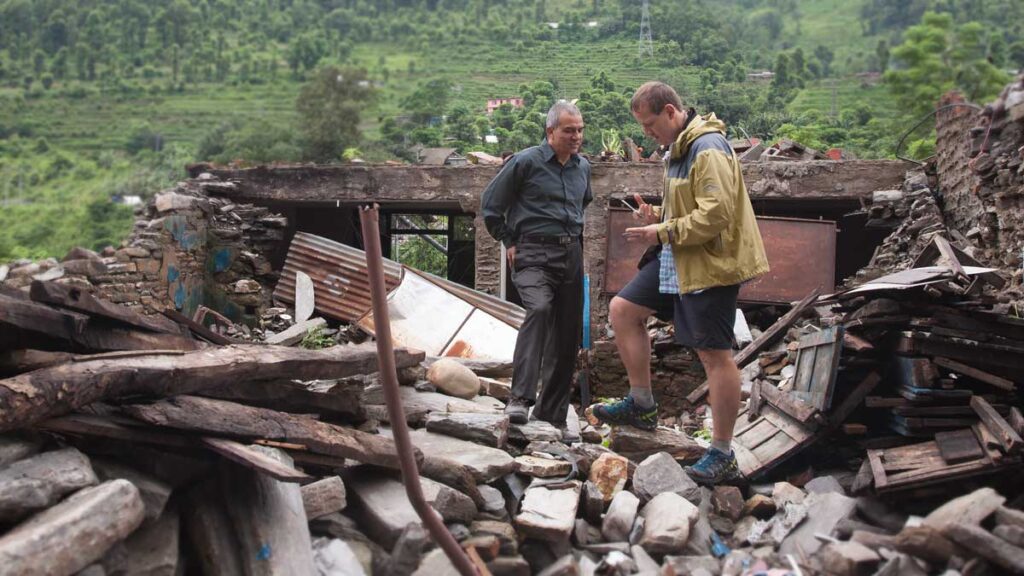
HDFA founder Duncan Chessell visiting the communities devastated by the 2015 Earthquake.
Location of Indrawati, Nepal
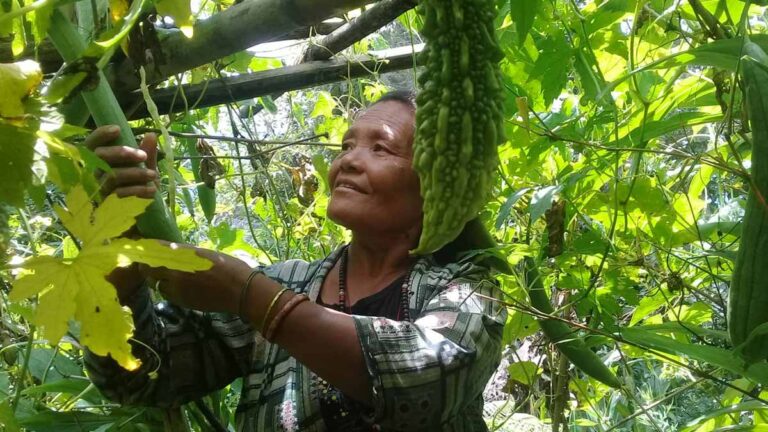
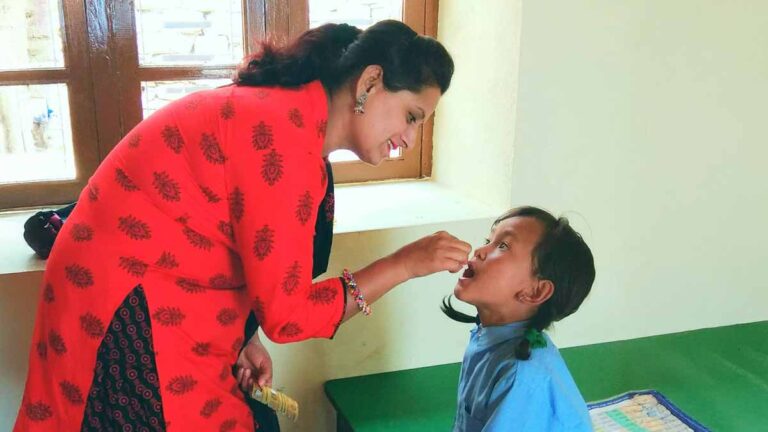
HDFA partnered with PHASE Nepal to take a long-term, practical approach: stabilise health services, strengthen local livelihoods and then improve education once families had the capacity to support regular school attendance. This approach was designed not only to improve wellbeing, but also to reduce the conditions that drive trafficking — especially when children are out of school or when parents migrate for labour. Over the years, the partnership has included 24/7 clinical services, maternity and emergency care, community health education, farmer training, small-scale agri-business development and the introduction of income-generating crops such as kiwi, lemons, mushrooms and vegetables.
With these foundations in place, HDFA expanded its focus to education. At Dhanjala Basic School, a new earthquake-resistant classroom block has been built, an Early Childhood Education room established and digital learning tools introduced. Teachers are now being supported with training in child-friendly teaching methods and audio-visual learning — steps that help keep children engaged, attending and safe in their own community.
A major milestone in 2025 was the full handover of the PHASE-supported Balgaun Health Post to local government management — a key indicator of long-term sustainability and local ownership.
Indrawati is progressing steadily: stronger schools, stronger farming systems and stronger local governance are reducing vulnerability, keeping families together and creating the conditions for children to stay in school and continue their education.
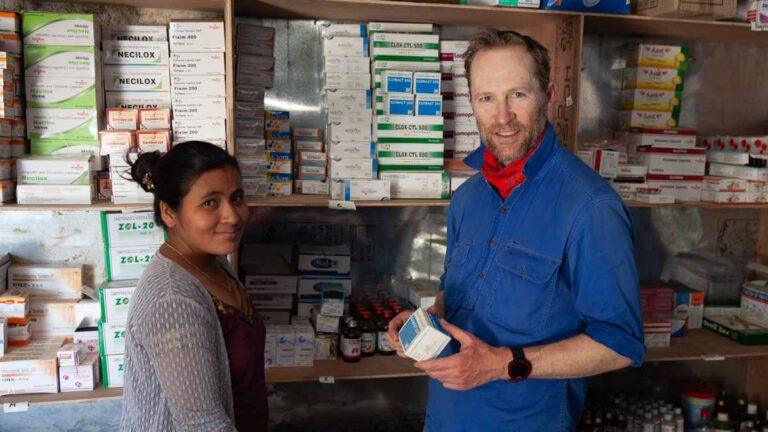
CASE STUDY: SARITA
A NEW START THROUGH GOAT FARMING
Sarita was a young mother living in Indrawati when her husband died unexpectedly. With a small daughter to raise and no stable income, she was living in a tin shed on the hillside above the school. In this region, where poverty was intensified after the 2015 earthquake, many families are exposed to traffickers seeking to exploit vulnerable children for labour.
Widowed women and their daughters are among the most at risk.
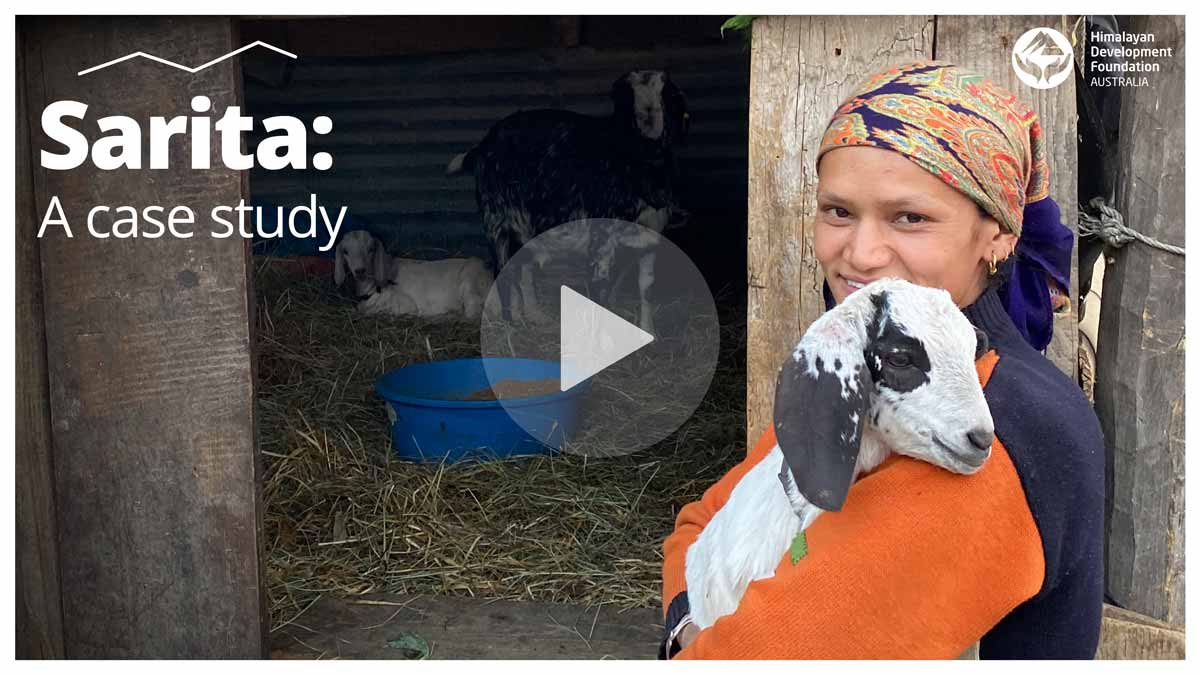
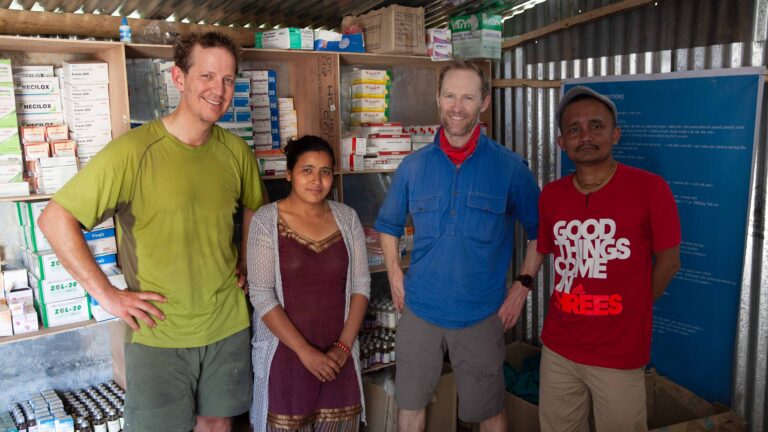
WATCH: Two of HDFAs founders Andrew Stace and Chris Miller share the realities families face in remote Nepal — and how HDFA’s livelihood programs are creating real change for women like Sarita.
Sarita had reached the point where she feared she might have to leave the area in search of work, a decision that often forces families apart and increases the likelihood of girls being trafficked or placed into unsafe labour. HDFA’s goat-farming program gave her another path.
She received a small starter herd and practical training to build her own income. As the goats reproduced, she returned animals to the program so another vulnerable family could benefit, while keeping enough to establish a stable source of livelihood.
With a reliable income behind her, Sarita was able to stay in her community and keep her daughter in school — the single strongest protection against trafficking in the region. Today, she volunteers at the school, serves on the local health board and is a respected voice for women and children.
Sarita says the goats gave her more than an income. They gave her and her daughter a future rooted in their own community, where safety, opportunity and schooling are now within reach.